
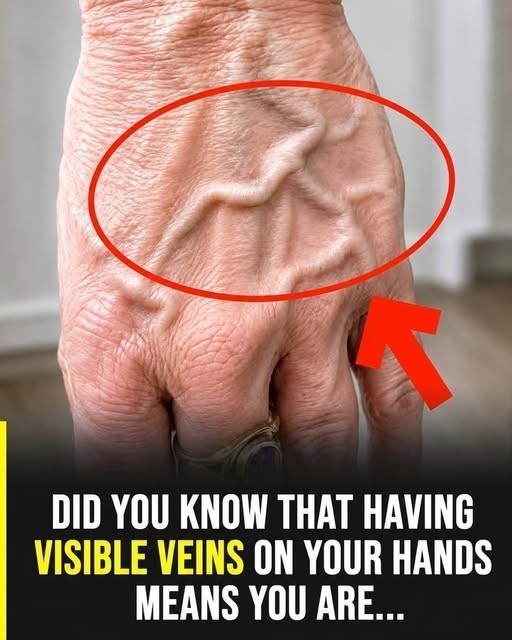
Have you ever looked down at your hands and noticed that the veins seem much more visible than they used to be?
For some people, prominent veins across the backs of the hands are simply a normal physical characteristic. For others, they may become more noticeable with age, exercise, changes in body composition, temperature, or hydration.
Although visible hand veins can sometimes be associated with changes in the body, they are not automatically a sign of illness.
Why Are the Veins on Your Hands Visible?
Veins are blood vessels that carry blood back toward the heart. Some veins lie relatively close to the surface of the skin, particularly on the hands and forearms.
When the skin becomes thinner or there is less tissue covering the veins, they can become easier to see.
Several factors can contribute.
1. Aging
One of the most common reasons veins become more noticeable is aging.
As we get older, the skin gradually becomes thinner and loses some of its elasticity. Subcutaneous fat can also decrease, leaving superficial veins more exposed.
As a result, veins that were barely noticeable when you were younger may become much more prominent over time.
2. Exercise
Have you ever noticed your hand and arm veins becoming more visible after exercising?
That’s normal.
During physical activity, blood flow increases and muscles require more oxygen. Blood vessels can temporarily become more prominent, particularly during resistance training or strenuous exercise.
Once your body returns to its resting state, the appearance may become less noticeable.
3. Lower Body Fat
People with relatively low body fat may naturally have more visible veins.
There is simply less tissue between the skin and superficial veins, making the vessels easier to see.
This doesn’t necessarily indicate a problem. In many healthy, physically active people, prominent veins are simply part of their normal anatomy.
4. Heat
Temperature can also affect how visible veins appear.
When you’re warm, blood vessels near the surface of the skin can widen as your body attempts to release heat.
This can temporarily make veins on your hands and arms look more prominent.
You may notice this after being outside on a hot day, taking a warm shower, or exercising in a warm environment.
5. Dehydration
Dehydration can sometimes make veins appear more prominent, particularly when combined with exercise or heat.
However, visible veins alone are not a reliable way to determine whether you’re dehydrated.
Other symptoms—such as thirst, dark urine, dizziness, or reduced urination—are more useful clues.
Are Prominent Hand Veins a Sign of Good Health?
Not necessarily.
Social media sometimes presents highly visible veins as proof of fitness or excellent circulation, but vein visibility doesn’t provide a reliable measurement of overall health.
A person’s genetics, age, skin thickness, body composition, activity level, and temperature can all influence how visible their veins are.
Someone can be perfectly healthy without visible veins, while someone with very prominent veins may have no special health advantage.
When Should You Pay Attention?
Most prominent hand veins aren’t dangerous.
However, a new or sudden change deserves more attention, especially if it occurs with other symptoms.
Contact a healthcare professional if a vein becomes:
- Painful
- Red
- Warm
- Swollen
- Hard or tender
- Associated with significant swelling of the hand or arm
You should also seek medical advice if the appearance changes suddenly without an obvious explanation.
What About One Hand Looking Different From the Other?
Some degree of asymmetry is normal. The veins on one hand may naturally be more visible than those on the other.
However, a sudden difference accompanied by swelling, pain, discoloration, or warmth should be evaluated by a healthcare professional.
These symptoms can have several possible causes, including problems involving the veins or surrounding tissues.
When Is It an Emergency?
Visible veins by themselves are usually not an emergency.
But seek urgent medical attention if significant arm swelling or pain occurs together with symptoms such as chest pain, difficulty breathing, fainting, or sudden unexplained shortness of breath.
These symptoms can indicate a potentially serious cardiovascular or blood-clot-related problem and shouldn’t be ignored.
Can You Make Hand Veins Less Visible?
If prominent veins are simply a normal part of your anatomy, there may be no medical reason to change them.
Trying to dramatically alter body weight or hydration solely to change the appearance of your veins isn’t recommended.
If the veins have become prominent because of temporary factors such as exercise or heat, they may become less noticeable once your body returns to its normal resting state.
The Bottom Line
Visible veins on your hands can mean many different things—and often, they mean nothing is wrong at all.
Age, genetics, exercise, body composition, skin thickness, and temperature can all make superficial veins easier to see.
The important thing is to pay attention to changes and accompanying symptoms, rather than judging health based on how visible your veins are.
If a vein suddenly becomes painful, swollen, red, warm, or otherwise unusual, it’s worth getting medical advice.
In most cases, though, those prominent veins on the backs of your hands are simply part of the way your body is built.