
Turkey hunting in the American South can take you through some beautiful but challenging terrain. Hardwood forests, swamps, creek bottoms, pine stands, and thick vegetation can all provide excellent habitat for wild turkeys.
They can also provide habitat for snakes.
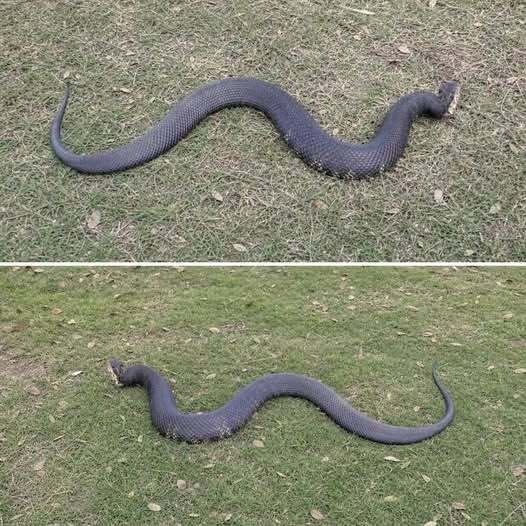
One of the snakes hunters may encounter in the Southeast is the cottonmouth, also known as the water moccasin. Learning to recognize this venomous snake and knowing how to respond to an encounter is an important part of outdoor safety.
What Is a Cottonmouth?
The cottonmouth (Agkistrodon piscivorus) is a venomous pit viper found primarily in the southeastern United States.
It is particularly associated with wet environments such as:
- Swamps
- Marshes
- Creeks
- Ponds
- Lakes
- River edges
- Wet forests
Despite its reputation, a cottonmouth generally does not seek out people. Like other wild animals, it may attempt to escape when given the opportunity.
The problem is that hunters moving quietly through dense vegetation can occasionally get surprisingly close to one.
How to Identify a Cottonmouth
Adult cottonmouths are typically thick-bodied snakes. Their coloration can vary from olive and brown to dark gray or nearly black.
Some individuals have visible darker bands along the body, while older snakes can become so dark that their pattern is difficult to see.
Several characteristics can help with identification.
The Head
Cottonmouths have a broad, somewhat triangular head that is noticeably wider than the neck.
However, head shape alone should not be used to identify a venomous snake. Nonvenomous snakes can flatten their heads when threatened and appear surprisingly similar.
The Body
Cottonmouths are heavy-bodied compared with many harmless snakes found in the same region.
Adults may appear particularly thick when coiled or moving through vegetation.
The Eyes
Cottonmouths have vertically elliptical pupils rather than round pupils.
However, attempting to get close enough to examine a snake’s eyes is obviously not a safe identification method.
The White Mouth
The feature that gives the cottonmouth its common name is the pale or white interior of its mouth.
When threatened, a cottonmouth may open its mouth widely, exposing the contrasting white lining.
This is a recognizable feature, but never approach or provoke a snake to make it display its mouth.
Cottonmouths Can Be Difficult to Recognize
Color and markings can vary considerably.
Young cottonmouths may look different from adults, and environmental conditions can make their colors difficult to see.
Other snakes can also be mistaken for cottonmouths.
For that reason, the safest approach is to identify a snake from a reasonable distance and avoid handling any snake you cannot confidently identify.
Where Hunters Are Most Likely to Encounter One
Cottonmouths are strongly associated with water and wet habitats.
During turkey season, hunters may encounter them around:
- Creek crossings
- Swamp edges
- Pond margins
- Flooded timber
- Wet trails
- Thick vegetation near water
- Fallen logs and debris
That doesn’t mean every snake near water is a cottonmouth. Many harmless species also live in or around aquatic habitats.
The important lesson is simply to remain aware of where you’re placing your hands and feet.
Watch Where You Step
Turkey hunting often involves moving slowly and quietly.
That can make it tempting to focus entirely on calling, tracks, scratching, or movement in the trees.
Don’t forget to scan the ground.
Before stepping over a log, look carefully at the area on the other side. A snake can be difficult to see among leaves, sticks, and vegetation.
Also avoid placing your hands into holes, hollow logs, brush piles, or other areas you cannot see into.
What Should You Do If You See a Cottonmouth?
The best response is simple:
Stop and give the snake space.
Don’t attempt to kill it.
Don’t poke it with a stick.
Don’t throw objects at it.
Don’t try to capture it for identification.
Instead, back away slowly and allow the snake a clear escape route.
Remember that a snake that appears motionless is still capable of moving quickly when it feels threatened.
What If the Snake Is on the Hunting Trail?
If a cottonmouth is blocking your path, don’t try to force it to move.
Give it time to leave.
If necessary, take a different route.
This may be inconvenient, but avoiding an unnecessary encounter is much safer than trying to move a venomous snake yourself.
What If You Are Bitten?
A cottonmouth bite is a medical emergency.
If you believe you have been bitten:
- Move away from the snake.
- Get emergency medical help as quickly as possible.
- Keep the affected limb as still as reasonably possible.
- Remove rings, watches, or other constricting items near the affected area because swelling may develop.
- Try to remain calm and avoid unnecessary physical exertion.
- Do not attempt to catch or kill the snake.
If possible and safe, remember its appearance from a distance. Do not risk another bite trying to photograph or identify it.
What Not to Do After a Snakebite
Several traditional snakebite treatments can cause additional injury and should be avoided.
Do not:
- Cut the wound
- Try to suck out the venom
- Apply a tourniquet unless specifically instructed by medical professionals
- Apply ice directly to the bite
- Attempt to electrically shock the wound
- Drink alcohol as a treatment
- Try to capture the snake
The priority is getting professional medical treatment as quickly as possible.
Why Turkey Hunters Should Be Especially Careful
Turkey hunting requires patience and concentration.
Hunters may spend long periods sitting quietly against trees, crawling through vegetation, or moving through areas where visibility is limited.
Before sitting down, take a moment to inspect the immediate area.
Check around:
- The base of the tree
- Fallen branches
- Leaf piles
- Logs
- Dense grass
- Rocks
- Nearby holes
You don’t need to become paranoid about snakes. A quick visual inspection can simply become part of your normal hunting routine.
Don’t Forget Other Outdoor Hazards
Snakes are only one potential hazard in Southern hunting country.
Hunters should also prepare for:
- Ticks
- Heat and dehydration
- Severe weather
- Uneven terrain
- Insects
- Poison ivy and other irritating plants
- Getting lost
- Accidental firearm injuries
Good preparation reduces the likelihood that a small problem becomes a serious emergency.
A Smart Safety Routine
Before heading into the woods, make sure someone knows where you’re hunting and when you expect to return.
Carry appropriate communication equipment, water, basic first-aid supplies, and weather-appropriate clothing.
When moving through thick or wet habitat, slow down enough to see where you’re stepping.
Most importantly, respect wildlife.
A cottonmouth isn’t an enemy that needs to be conquered. It’s a wild animal occupying its habitat. Giving it room is usually the safest solution for both the hunter and the snake.
Final Thoughts
Turkey hunting in the South can be an unforgettable outdoor experience, but the woods demand awareness.
Knowing what a cottonmouth looks like, recognizing the types of habitat where it may occur, and understanding how to respond to an encounter can help hunters avoid unnecessary risks.
You don’t need to fear every snake you see.
Stay alert, keep your distance, watch where you put your hands and feet, and never handle a snake simply to confirm its identity.
A successful hunt isn’t just about bringing home a turkey—it’s also about getting home safely.