
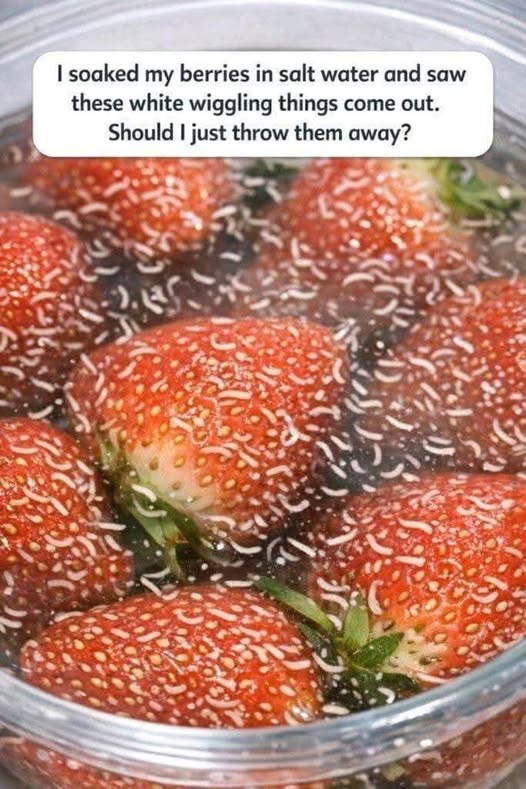
Have you ever soaked fresh berries in salt water and noticed tiny insects, larvae, or other small particles floating in the water afterward?
Videos showing this phenomenon have become popular online, especially with strawberries, raspberries, and other soft fruits. While the sight can be unpleasant, there is a simple explanation: small insects or their larvae can sometimes be present on or inside fresh produce.
But does soaking berries in salt water really “draw out” hidden bugs? And is it necessary to do this every time you eat fruit?
Let’s take a closer look.
Why Can Tiny Bugs Be Found on Berries?
Berries grow outdoors, where they are exposed to insects and other organisms throughout the growing season.
Some insects lay eggs on fruit or near developing fruit. Depending on the species, tiny larvae may remain on the surface, hide among the fruit’s small structures, or develop inside damaged or overripe produce.
Soft fruits such as raspberries and strawberries can have many small crevices where tiny insects or debris may be difficult to see.
This doesn’t necessarily mean the fruit is contaminated or unsafe. Finding an occasional insect on fresh produce is a natural consequence of growing food outdoors.
Does Salt Water Really Remove Them?
Salt-water soaking may cause some small organisms or loose debris to detach from the fruit.
Salt changes the water’s concentration and can affect tiny organisms exposed to it. Movement, water penetration, and the soaking process itself can also help loosen material from the fruit.
However, the popular claim that salt water reliably forces every hidden insect or larva out of berries is not scientifically established as a universal cleaning method.
If you see something emerge from a berry after soaking, it doesn’t necessarily mean that every berry contains insects or that salt water is required to make the fruit safe.
What About the Viral Strawberry Videos?
Many viral videos show strawberries placed into salty water, followed by tiny objects appearing in the water.
Some of the objects may indeed be small insects or larvae. Others may be pieces of plant material, debris, or other particles.
The exact identity of something seen in a video cannot always be determined simply from its appearance.
That’s why viral demonstrations should be viewed carefully rather than treated as proof that all berries contain hidden bugs.
Is It Safe to Eat Berries?
Fresh berries can be part of a healthy diet. Like other fresh fruits and vegetables, however, they can carry dirt, microorganisms, and other contaminants from the environment.
The safest approach is to wash fresh produce thoroughly under clean, running water before eating it.
Washing can remove dirt, debris, and some microorganisms from the surface.
It is generally unnecessary to use soap, detergent, or household cleaning chemicals on fruit.
How to Properly Wash Berries
If you’re preparing berries at home, follow these simple steps:
1. Check the Fruit
Remove berries that are visibly moldy, badly damaged, or spoiled.
Don’t simply wash mold off one soft berry and eat it. Mold can spread beyond what is visible.
2. Wash Your Hands
Wash your hands with soap and water before handling food.
3. Rinse Under Running Water
Place the berries in a clean colander and rinse them gently under cool, running water.
Avoid using excessively strong water pressure because delicate berries can be damaged easily.
4. Handle Them Gently
Don’t crush or squeeze the fruit unnecessarily.
5. Dry Them
Use a clean paper towel or clean cloth to gently remove excess moisture.
Keeping berries dry can help slow spoilage during storage.
Should You Use Salt Water?
A salt-water soak is not required for routine produce washing.
If you prefer to soak berries briefly in water because you are concerned about visible insects or debris, rinse them thoroughly with clean running water afterward.
However, soaking delicate berries for long periods can affect their texture and may contribute to faster spoilage.
For everyday food safety, proper handling and washing with clean running water are more important than trying to eliminate every microscopic organism.
What About Vinegar Water?
You may also see recommendations to soak berries in vinegar and water.
Vinegar solutions are sometimes used at home to help clean produce, but they should not be considered a replacement for normal washing and safe food handling.
If you use any soaking method, rinse the fruit afterward with clean water and avoid leaving delicate berries submerged for an extended period.
A Surprising Truth About Fresh Produce
The idea of tiny insects appearing on fruit can be disturbing, but the presence of an occasional small insect doesn’t automatically mean that the fruit is dangerous.
Fresh produce comes from agricultural environments where insects, soil, water, plants, and microorganisms naturally interact.
The goal of washing fruit isn’t to make it completely sterile. Instead, proper washing and food handling help remove unwanted dirt, debris, and some contaminants before consumption.
Final Thoughts
Soaking berries in salt water can sometimes cause tiny insects, larvae, plant material, or other debris to become visible. This can look alarming, especially when shown in a viral video.
However, salt-water s