
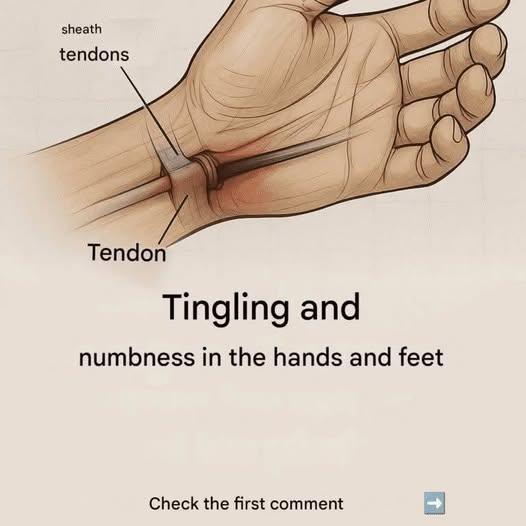
Have you ever noticed your hands or fingers becoming numb, tingly, or unusually “asleep”? Sometimes, this sensation is temporary and harmless. For example, sleeping on your arm or keeping your wrist in an awkward position can briefly compress a nerve.
However, recurring or persistent hand numbness can have many possible causes, ranging from nerve compression to vitamin deficiencies, diabetes, circulation problems, or certain neurological conditions.
Understanding the pattern of numbness can provide useful clues about what may be happening.
What Does Hand Numbness Feel Like?
Hand numbness can involve a partial or complete loss of sensation. Some people describe it as:
- Pins and needles
- Tingling or prickling
- Burning
- Reduced sensitivity
- A “dead” feeling
- Electric-shock-like sensations
- Weakness or difficulty gripping objects
The location and timing of the symptoms can be important.
1. A Compressed Nerve
One of the most common explanations for numbness in the hand is pressure on a nerve.
For example, carpal tunnel syndrome occurs when the median nerve becomes compressed at the wrist. It commonly causes tingling or numbness affecting the thumb, index finger, middle finger, and part of the ring finger.
Symptoms may become more noticeable at night or during activities involving repetitive wrist movements.
Other nerves can also become compressed at the elbow, wrist, or elsewhere along the arm.
2. Sleeping in an Awkward Position
Temporary numbness can happen when pressure is placed on a nerve while sleeping.
You may wake up with a hand or arm that feels numb or tingles. Once pressure is removed and normal circulation and nerve function return, the sensation usually disappears.
Occasional episodes like this are generally different from numbness that repeatedly occurs without an obvious position-related cause.
3. Diabetes and Nerve Damage
Long-term high blood sugar can damage nerves, a condition known as diabetic peripheral neuropathy.
Although the