
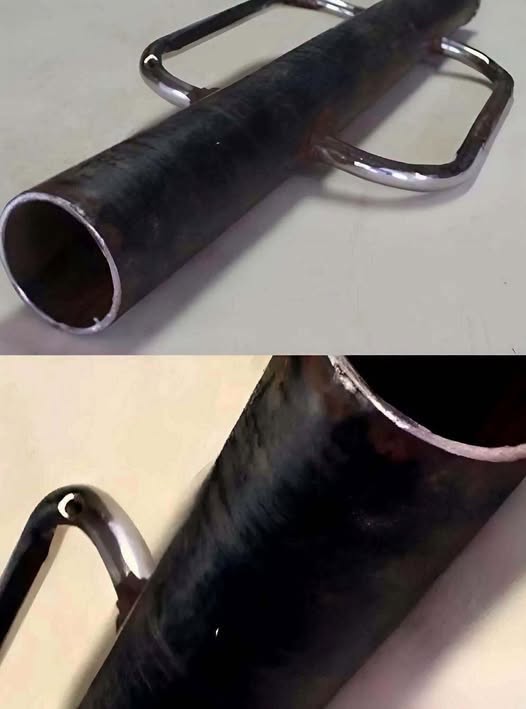
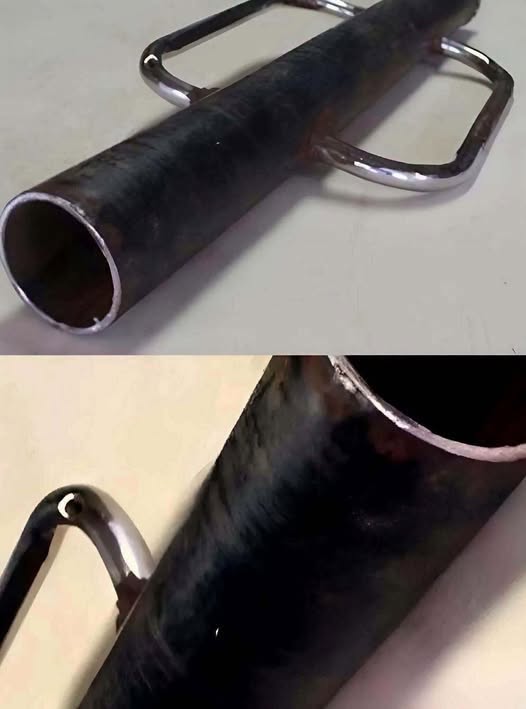
At first glance, it may look like nothing more than a rough piece of steel. It is heavy, solid, strangely shaped, and perhaps even covered with years of scratches, dents, or surface rust. But objects like this often have a story behind them.
Old workshops, farms, garages, factories, and toolboxes are filled with metal objects whose original purpose is no longer obvious. Some were designed for very specific jobs, while others were parts of larger tools or machines.
So, what exactly could a mysterious heavy steel chunk be?
A Tool Designed for Strength
One of the first clues is the object’s weight.
Traditional hand tools were often made from thick steel because they needed to withstand repeated impacts, pressure, or twisting forces. A heavy metal body could provide stability while a worker struck, pressed, bent, supported, or positioned another object.
Unlike modern lightweight tools, older equipment was frequently built to last for decades. A simple-looking steel block could therefore be an extremely durable piece of workshop equipment.
Could It Be Part of an Anvil?
One possibility with unusually heavy steel objects is that they may be related to an anvil or metalworking equipment.
Anvils provide a hard, stable surface on which heated metal can be hammered and shaped. They are intentionally heavy because their mass helps absorb and distribute the force of repeated blows.
However, not every heavy steel object is an anvil. The shape, working surfaces, holes, grooves, and any visible markings are important clues.
A flat polished section could indicate that the object was intended to receive impacts, while a rounded or specially shaped section might have been designed for bending or forming metal.
Maybe It Was a Specialized Workshop Tool
Another possibility is that the mystery object was a specialized tool.
Older trades often relied on tools that were designed for one particular operation. Blacksmiths, mechanics, machinists, farmers, railway workers, and construction workers all used specialized pieces of equipment that may look completely mysterious today.
For example, a steel tool could have been used as:
- A forming block
- A support or fixture
- A bending tool
- A striking tool
- A bearing or machine component
- A clamp component
- A metalworking die
- A replacement part for industrial machinery
The lack of a handle doesn’t necessarily mean it wasn’t a tool. Many workshop tools were designed to be held in a vise, mounted to a bench, inserted into machinery, or used together with another component.
Why the Shape Matters
When identifying an old metal object, its shape is often more useful than its appearance.
Look closely at the edges and surfaces.
Are some areas perfectly flat while others are curved? Is there a hole through the center? Are there threads? Does one end appear polished? Are there grooves, notches, teeth, or recesses?
Every unusual feature can provide a clue.
For example, a circular hole might indicate that the object was mounted on a shaft or secured with a bolt. A threaded opening could suggest that another component was attached to it. A highly polished surface could indicate repeated contact with another piece of metal.
Even dents can be meaningful.
A collection of impact marks may suggest that the object was repeatedly struck with a hammer, while smooth wear patterns could indicate that it was part of a moving mechanism.
The Importance of the Steel Itself
The material can also help narrow down the possibilities.
Many traditional tools were manufactured from carbon steel or other durable steel alloys because these materials could tolerate heavy mechanical use.
A magnet can sometimes provide a basic clue about whether an object contains significant ferrous material, although magnetism alone cannot identify a particular tool.
Rust patterns can also reveal something about the object’s history. Surface rust is common on old iron and steel, especially when an object has spent years in a damp garage, barn, basement, or outdoor environment.
But rust should not automatically be interpreted as evidence that the object is ancient. Even relatively modern steel can develop substantial corrosion when exposed to moisture.
Could It Be a Machine Part?
This is one possibility that is easy to overlook.
Not every strange chunk of steel was meant to be used by itself. It could have originally belonged to a larger machine.
Factories and workshops once contained enormous numbers of mechanical components—blocks, brackets, weights, dies, gears, supports, couplings, fixtures, and counterweights.
After machinery was dismantled or repaired, individual components could easily end up in scrap piles or toolboxes.
A mysterious steel object with no obvious handle may therefore be a machine component rather than a conventional hand tool.
The Patina Tells a Story
The surface of an old steel object can sometimes provide clues about how it was used.
A uniformly rusty surface might simply indicate long-term exposure to moisture.
On the other hand, a tool with a combination of rusted and highly polished areas may have experienced repeated contact or handling. A section that remains unusually smooth could have been the working surface.
Grease, oil residue, paint, or embedded metal particles can provide additional clues.
Of course, surface appearance should be treated as evidence rather than proof. Different environments can produce very similar-looking patinas.
Why Old Tools Can Be So Difficult to Identify
The biggest problem with mystery tools is that their original context is often missing.
Imagine finding a steel object by itself in an old garage. The person who originally used it may have known exactly what it was because it belonged to a particular machine or trade.
Decades later, that context disappears.
The original machine may be gone. The workshop may have been demolished. The manufacturer may no longer exist. And the people who knew how the tool was used may no longer be around.
That is why an ordinary-looking steel object can become an interesting puzzle.
What Should You Look For?
If you have discovered a mysterious heavy metal tool, photograph it from several angles.
Try to document:
- Overall shape – Take photographs from the front, back, and sides.
- Dimensions – Measure its length, width, and height.
- Weight – A scale can provide an important clue.
- Markings – Look for letters, numbers, logos, or patent information.
- Holes and threads – These can reveal how the object was mounted.
- Wear patterns – Look for polished, scratched, dented, or flattened areas.
- Material – Determine whether it appears to be steel, cast iron, or another metal.
- Where it was found – A garage, farm, factory, workshop, or railroad site can dramatically change the possibilities.
The location where an object was discovered is sometimes almost as useful as the object itself.
Don’t Clean It Too Quickly
If the object might be old or historically interesting, avoid aggressively grinding, sanding, or polishing it before identification.
Removing rust or old paint can destroy markings and surface evidence that could help identify it.
A gentle cleaning may eventually be appropriate, but it is better to document the object first.
Take clear photographs before making any changes.
A Mystery Waiting to Be Solved
The most fascinating thing about an old steel tool isn’t necessarily what it looks like today. It is what it tells us about the work people once did.
A simple chunk of steel could have spent years in a blacksmith’s shop, mechanic’s garage, factory, farm, railroad workshop, or machine room. Its unusual shape may have been designed around a job that was obvious to workers generations ago.
Today, without the original context, it becomes a mystery.
And that’s what makes these objects so interesting.
The next time you encounter a heavy, oddly shaped steel object, don’t dismiss it as scrap metal. Look for the clues: the shape, weight, markings, wear, holes, surface finish, and location where it was found.
Those details may reveal that the seemingly ordinary piece of steel was actually a specialized tool with a very practical purpose.
Sometimes, the smallest forgotten objects have the biggest stories behind them.